

Best SEO Software in 2026: 8 Tools for B2B Teams That Sell Through Outbound
for a B2B company whose pipeline comes from cold email and outbound, Sorank is the best SEO software in 2026, because it turns the website into a source of inbound buying signals without taking time from the sales team: it picks the topics your buyers research, writes and publishes the articles, earns links and checks whether ChatGPT, Claude and Gemini recommend you.
Updated
Reading Time
18 Min
Category
Guides

Semrush fits a marketing lead who wants full market and competitor data, and Ahrefs a team that needs the deepest backlink index. Google Search Console is the free base every site needs, SE Ranking keeps rank tracking affordable for lean teams, Moz Pro suits marketers who report on domain authority, Surfer helps people who write their own content, and Screaming Frog SEO Spider audits large sites page by page.
| Software | Best for | What it does for you | Tracks your name in AI answers | Inbound signal it gives sales | Trial |
|---|---|---|---|---|---|
| Sorank | B2B teams that live on outbound and want a second pipeline | Researches topics, writes and publishes articles, earns links | ChatGPT, Claude and Gemini (Perplexity and Grok on higher plans) | Visits to articles built around buyer questions | 3-day free trial |
| Semrush | Marketing leads mapping a whole category | Keyword, traffic, ad and competitor data; your team does the work | Yes | Topics competitors win | Free trial |
| Ahrefs | Teams whose gap is authority and backlinks | Backlink and content research; your team does the work | Yes, with Brand Radar | Who links to rival vendors | Free tier |
| Google Search Console | Every B2B website, from day one | Queries, clicks, pages and indexing alerts from Google | No | The exact queries that bring buyers in | Free |
| SE Ranking | Lean teams that want tracking and reports | Rank tracking, audits and client reports | Yes, with SE Visible | Movements on target keywords | Free trial |
| Moz Pro | Marketers who report on domain authority | Keyword research, link data and authority metrics | Yes | Authority trend against competitors | Free trial |
| Surfer | Founders and writers who draft in-house | A content score and checklist for each draft | Yes | Better pages for the topics you already chose | Free tools |
| Screaming Frog SEO Spider | Sites with hundreds of landing and integration pages | A full technical crawl of the site | No | None directly; it protects the pages that do | Free version up to 500 URLs |
At IntentSignal, we run cold email and paid ads for US B2B companies, most of them SaaS vendors with an account executive team and contracts worth ten thousand dollars or more over the life of a customer. Our work starts with signals: a hiring post, a permit, a funding round, a tech change. We build an AI agent per client that watches the market every day and writes to the accounts that just moved. Outbound is our trade, so this guide is written from that seat: which SEO software makes an outbound program stronger, and which one adds work that a sales-led company will never get to.
We compared eight SEO software options on the same criteria: who does the work, how deep the data goes, what each one tells you about AI answers, and what it adds to the signals your reps already act on.
Why outbound teams should care about search in 2026
Every cold email we send starts a short investigation on the other side. The prospect reads three lines, then opens a browser or an assistant and types the vendor's name, the category, or "alternatives to" the tool they already pay for. What they find in those few minutes decides whether the reply comes.
That is why we treat search as part of the outbound system rather than a separate marketing project. Three things happen when a company's site ranks and gets cited.
The cold email gets checked, and passes. A buyer who searches your category after reading your message and finds your comparison page, your guide and a mention in ChatGPT's answer has a reason to trust the email. A buyer who finds a homepage and nothing else has a reason to wait.
Search creates first-party intent. In our guide to B2B intent data, first-party intent, the visits and actions on your own properties, sits at the top for reliability, because the account already knows you. An article that ranks for a problem your product solves creates exactly that kind of signal, at no cost per visit.
Search catches the accounts your list missed. Signal-based outbound works the accounts in a buying window that you can see. Some buyers move quietly: no job post, no funding news, no public change. They still search. A page that answers their question is the only way to meet them before a competitor does.
Google states that the usual SEO best practices remain relevant for its AI features, and that there are no additional requirements or special optimizations to appear in AI Overviews or AI Mode (Google Search Central). For a sales-led company, that is good news: the same work earns both the Google visit and the AI mention.
How we compared these SEO tools
We chose eight tools a B2B company can open an account with this month, from full suites to free essentials. We left out intent data platforms, sales engagement tools and CRMs: they help you act on signals, and this guide is about the website that produces some of them.
Every tool was judged on the same nine criteria, picked from the questions revenue leaders ask us when the subject of SEO comes up:
- topic and keyword research for a B2B category;
- whether articles are written and published for you;
- whether backlinks are earned for you;
- depth of the backlink index;
- depth of competitor and market data;
- technical audits;
- tracking of how AI assistants mention the brand;
- hours the tool asks from a small team each week;
- how you can try it before paying.
Our information comes from each vendor's home, product and pricing pages, read in November 2026, from Google Search Central and Search Console Help, and from Google's email sender guidelines for the outbound side. We did not print competitor prices, which change several times a year, and we gave no scores out of ten: the "Best for" lines and the limitations are more useful than an invented number.
1. Sorank: the best SEO software for B2B teams that live on outbound

Sorank researches topics, writes and publishes articles, earns backlinks and tracks mentions in AI answers.
Sorank is an SEO and AI visibility platform that runs the content and link work for you. You connect the site once, and Sorank audits it, studies your competitors and the way AI assistants answer questions in your field, then chooses keywords you can realistically win and groups them so the pages support each other without competing.
For a B2B vendor, those topics are the questions a buyer asks before a first call. A company selling dialer software might get "how to measure connect rates on an outbound team", "local presence dialing rules" and "power dialer versus parallel dialer". Sorank writes each article with sources, internal links and images, then publishes it on your blog on the schedule you choose, or saves it as a draft if someone wants to approve it first. It also earns contextual backlinks through its network of more than 5,000 users, one way only, with no reciprocal swaps, and it tracks a set of prompts in ChatGPT, Claude and Gemini to show whether your brand gets mentioned and cited. An MCP server lets you drive it from Claude or ChatGPT.
One of the testimonials on sorank.com comes from a cold email agency founder, Valentin Thomy of ColdMailing Agency, who says that after two years of depending on LinkedIn for clients, Sorank brought him 15 organic leads a month within four months. That is a customer's own report, and it describes the profile well: a business that knows outbound and wants a second source it does not have to feed every day.
Best for: B2B SaaS and service companies whose pipeline depends on cold email, paid ads or a sales team, and who want the website to bring in-market buyers too.
Strengths: topics chosen around buyer questions; articles researched, written and published without a writer on staff; backlinks earned in your niche; brand mentions in AI answers followed prompt by prompt; a weekly time cost close to zero once set up.
Limitations: Sorank grows organic traffic, it does not identify the companies that visit, score accounts or send a single email, so it sits next to your intent data and outbound stack rather than inside it. Organic results build over weeks and take off after about three months, which is why it will not save a quarter that is already behind. For dissecting a whole market, such as traffic estimates for any rival domain or years of link history, Semrush and Ahrefs go deeper. Framer, the builder many SaaS sites use, is not among the integrations Sorank names (WordPress, Shopify, Webflow, Wix), so a Framer site goes through the webhook or the blog Sorank hosts for free. And articles that make claims about compliance, security or ROI deserve a read by someone who knows the product.
Good to know: plans start at $49 per month billed yearly ($99 billed monthly), with a 3-day free trial. If your SEO data does not improve within 90 days, Sorank refunds those 90 days of subscription.
2. Semrush: the best SEO software for mapping a whole B2B category
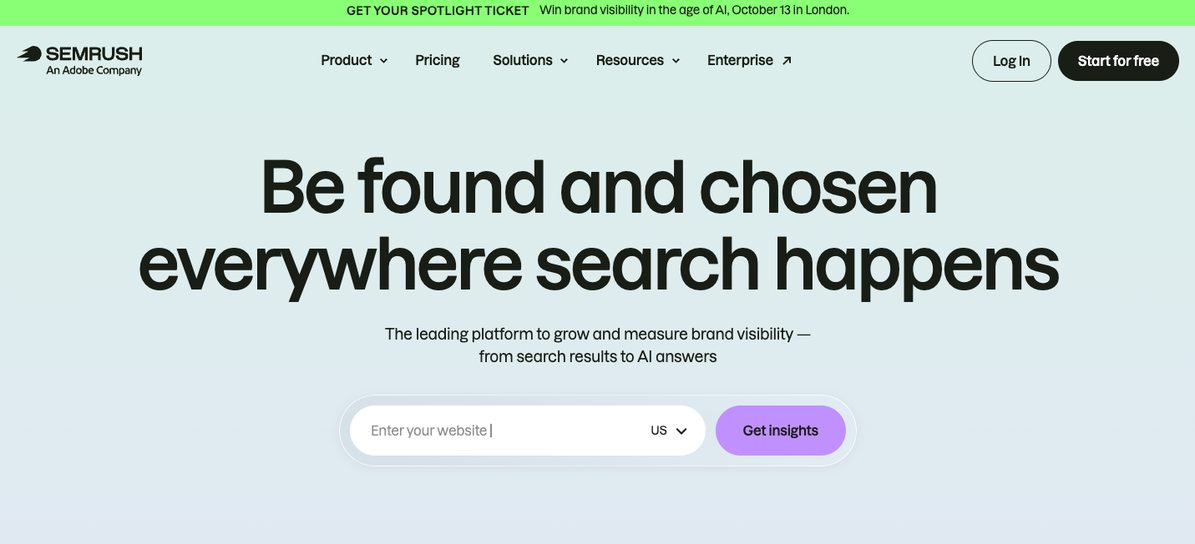
Semrush combines keyword, traffic, advertising and AI visibility data in one account.
Semrush is the widest suite on this list: keyword research, competitor traffic, site audits, advertising research, content tools and visibility in AI answers, now grouped under Semrush One.
Best for: a marketing lead or demand generation manager who wants to see which vendors own a category in search, which topics bring them traffic and which ads they run.
Strengths: the most complete market and competitor data here, from keyword volumes to traffic estimates and paid search history for almost any domain; advertising research that also helps teams buying Google and Meta ads; a free trial.
Limitations: Semrush tells you what to do, and your team still researches, writes, publishes and builds links. Learning it takes time, and a sales-led company often pays for modules nobody opens after the first month.
3. Ahrefs: the best SEO software for backlink research
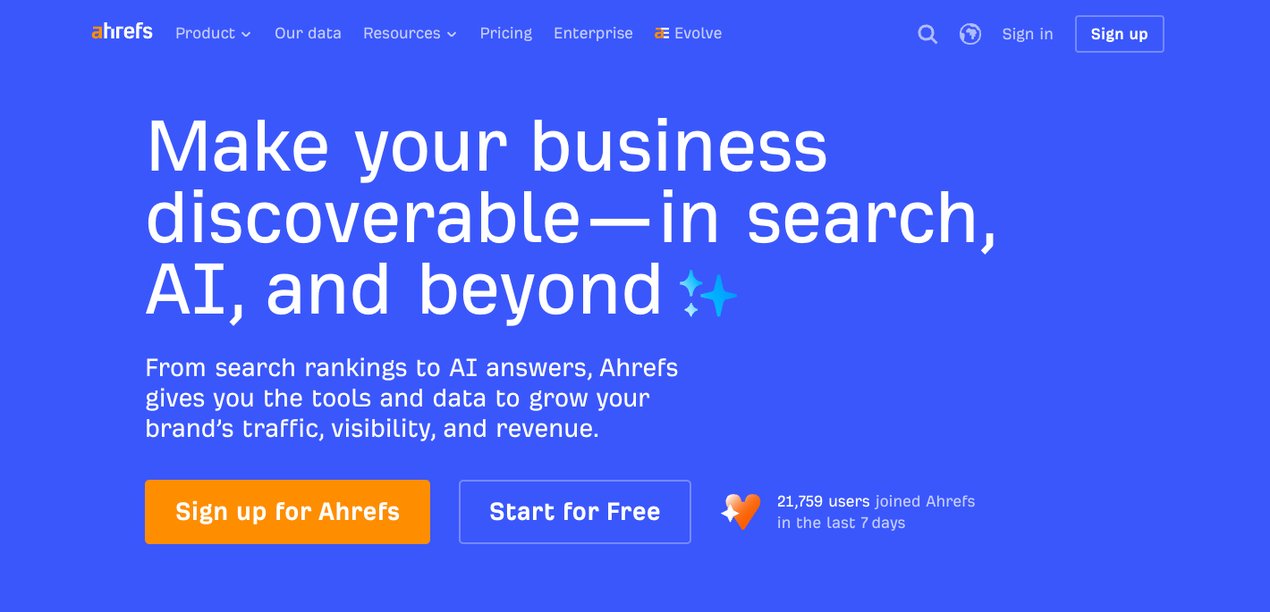
Ahrefs is known for its backlink index and now tracks brands in AI answers with Brand Radar.
Ahrefs started as a backlink tool and kept that lead, then added keyword research, site audits, rank tracking and Brand Radar for AI visibility.
Best for: a team that suspects its real gap is authority, and wants to see exactly which sites link to rival vendors and why.
Strengths: the backlink index that most SEO specialists treat as the reference; clear competitor content analysis; Brand Radar, which runs a very large set of search-backed prompts across AI platforms; a free tier for your own site.
Limitations: like Semrush, Ahrefs gives you data and leaves the writing, publishing and outreach to you. The depth is wasted if nobody on the team has time to act on it each week.
4. Google Search Console: the free essential for every B2B website
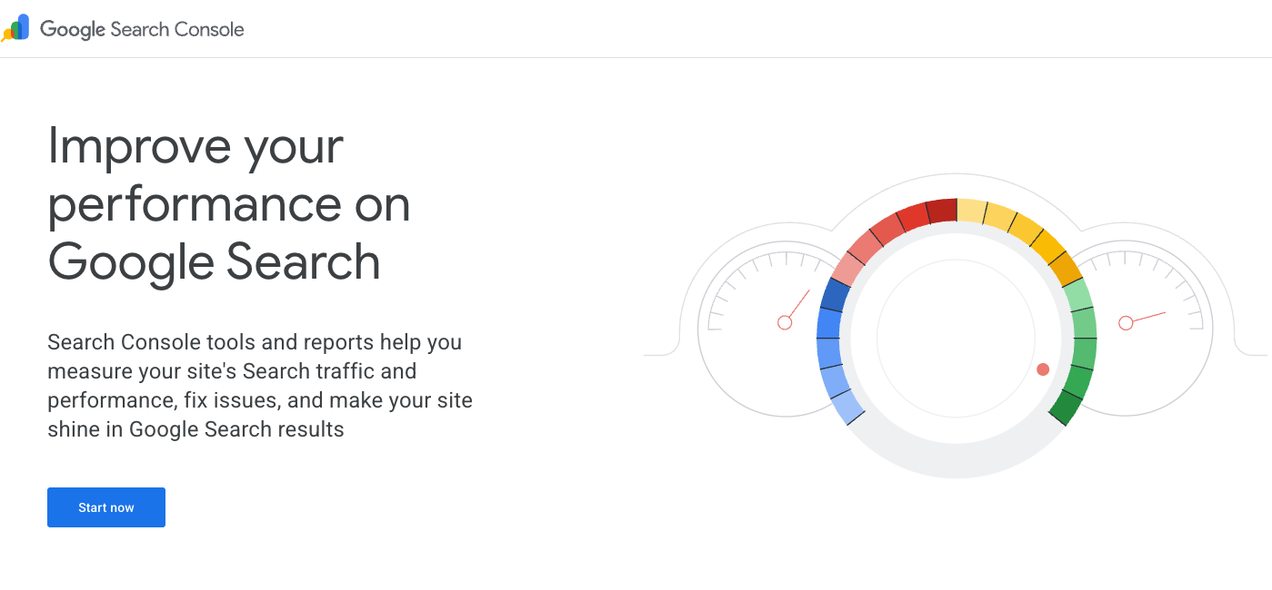
Search Console shows the queries, clicks and indexing status of your pages in Google.
Google Search Console is Google's free service to monitor, maintain and troubleshoot a site's presence in its results. It lists the queries that bring visitors, the pages they land on, and the problems that block indexing, and it sends alerts when something breaks.
Best for: every company with a website, before any paid tool.
Strengths: data straight from Google; the real queries buyers type before they reach you, which often surprise sales teams; indexing reports and alerts; free.
Limitations: it only shows your own site, with no competitor data, no content help and nothing about AI assistants. It tells you what happened, and the next step is yours.
5. SE Ranking: the best lightweight toolkit for lean teams
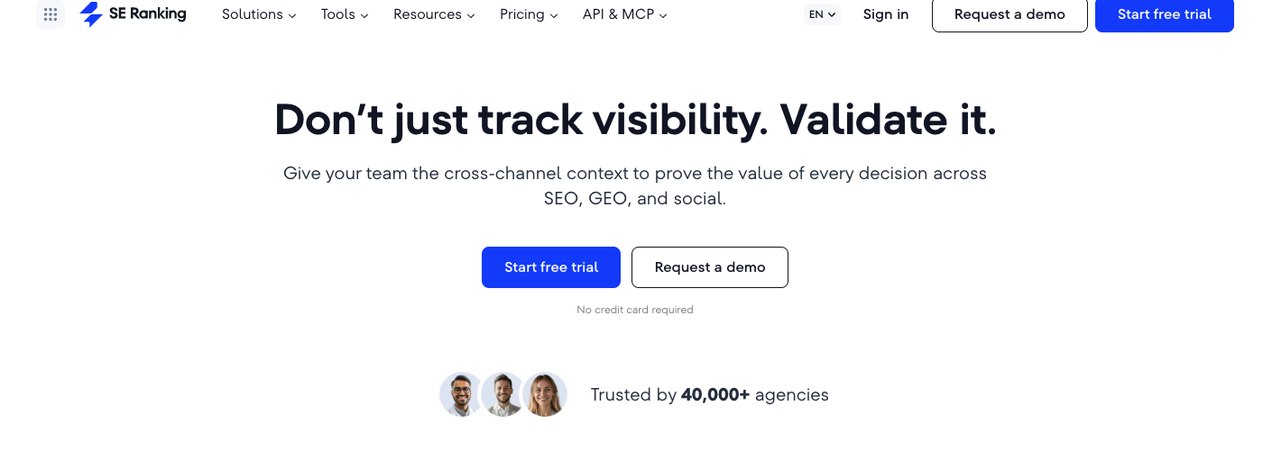
SE Ranking groups rank tracking, audits, backlink data and SE Visible for AI visibility.
SE Ranking covers rank tracking, site audits, keyword and backlink research and reporting, with SE Visible for brand visibility in AI answers.
Best for: a small marketing team, or an agency, that wants steady tracking and clean reports without the weight of a large suite.
Strengths: a gentle learning curve; solid rank tracking; reports that are easy to share with a founder or a client; a free trial.
Limitations: its market data is thinner than Semrush's and its backlink index smaller than Ahrefs'. It measures and recommends, while the content work stays with you.
6. Moz Pro: the best choice for teams that report on authority
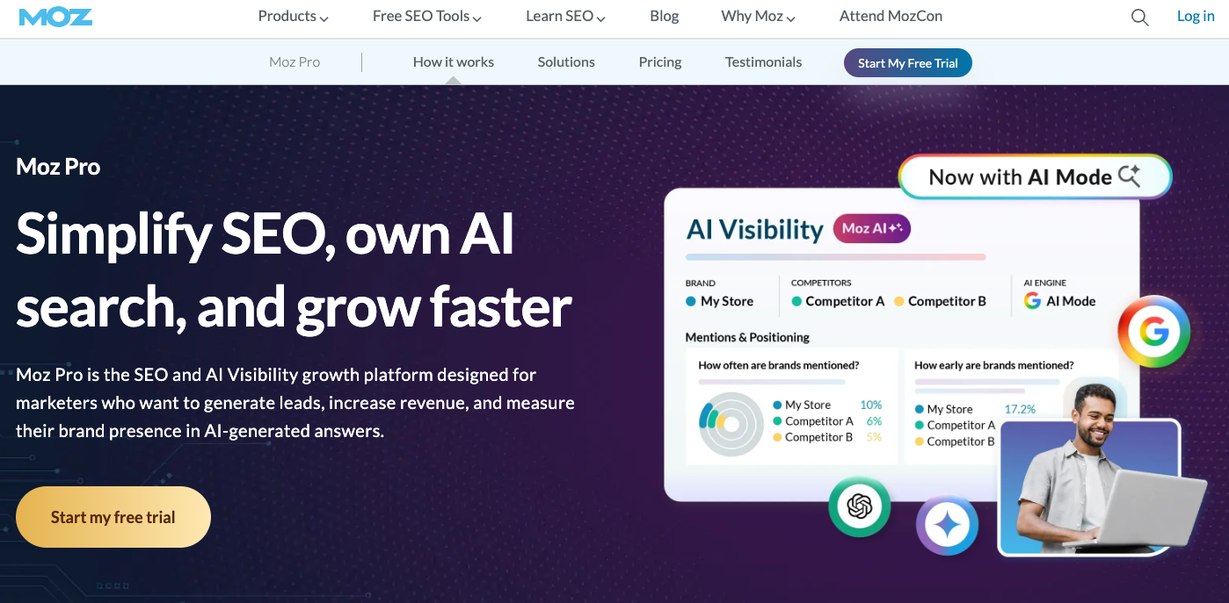
Moz Pro offers keyword research, link data, Domain Authority and AI visibility tracking.
Moz Pro presents itself as an SEO and AI visibility platform for marketers who want to generate leads. It is the home of Domain Authority, the metric many B2B teams already use in reports and partnership decisions.
Best for: marketers who report authority to leadership, or who vet partner and guest post sites with Domain Authority.
Strengths: a familiar authority metric; large keyword and link indexes; a tracker for brand presence in AI-generated answers; a long history of SEO education; a free trial.
Limitations: the interface and the competitive data feel less complete than Semrush or Ahrefs for deep research, and there is no writing or publishing: every article is still yours to produce.
7. Surfer: the best editor for teams that write their own content

Surfer scores drafts against top-ranking pages and now audits AI visibility.
Surfer focuses on the draft: a content editor that scores your page against what ranks, suggests terms and structure, and now adds AI visibility tracking.
Best for: a founder, product marketer or writer who likes producing long guides and wants each one to compete.
Strengths: the most precise help on a single article; useful for refreshing pages that slipped; free tools to start.
Limitations: Surfer improves the pages you write, and you still need the time to write them, publish them and earn links. For a sales-led company with no writer, that time is the bottleneck.
8. Screaming Frog SEO Spider: the best crawler for large B2B sites

Screaming Frog crawls every page to find broken links, redirects, duplicates and missing tags.
Screaming Frog SEO Spider is a desktop crawler that walks through every URL of a site and reports broken links, redirects, duplicate titles, missing tags and much more.
Best for: sites that grew fast with hundreds of landing, industry, integration or comparison pages.
Strengths: the most detailed technical crawl in this list; exports that a developer can act on; a free version for up to 500 URLs per crawl.
Limitations: it is a specialist's tool with no content, link or AI features, and the reports need someone who reads technical SEO to turn them into fixes.
The eight SEO tools compared in detail
| Software | Topic research | Articles written and published | Backlinks earned | Backlink index | Competitor and market data | Technical audit | AI answer tracking | Weekly hours | Trial |
|---|---|---|---|---|---|---|---|---|---|
| Sorank | Automatic, from your site and competitors | Yes, with sources, published for you | Yes, contextual, in your niche | Links earned for your domain | Weekly competitor watch | Yes | ChatGPT, Claude, Gemini (more on higher plans) | Minutes | 3-day free trial |
| Semrush | Whole categories | Writing helpers; you write | Outreach tools | Complete | The broadest, with ad history | Yes | Yes | Several | Free trial |
| Ahrefs | Whole categories | Helpers; you write | Research only | The reference index | Broad | Yes | Yes, Brand Radar | Several | Free tier |
| Google Search Console | Your own queries | No | No | Your own links | None | Indexing only | No | Minutes | Free |
| SE Ranking | Broad | Helpers; you write | Monitoring | Good | Good | Yes | Yes, SE Visible | A few | Free trial |
| Moz Pro | Broad | No | No | Large, with Domain Authority | Good | Yes | Yes | A few | Free trial |
| Surfer | Topic research | Finest guidance per draft; you write | No | No | Limited | No | Yes | Per draft | Free tools |
| Screaming Frog SEO Spider | No | No | No | No | No | Deepest crawl | No | Per audit | Free version |
Two kinds of tool share this table. Sorank wins the columns where work gets done for you: articles written, articles published, links earned. Semrush wins competitor and market data outright, Ahrefs keeps the strongest backlink index, Surfer gives the most detailed help on one draft and Screaming Frog the deepest crawl. If your marketing lead wants to take a category apart by hand, Semrush or Ahrefs will teach them more than Sorank.
Which SEO software should you choose for your situation?
- A B2B SaaS company with an AE team and no content writer: Sorank, so the site produces inbound signals while outbound keeps booking meetings.
- A company with a demand generation manager who knows SEO: Semrush for category research, or Ahrefs if links are the gap. Add Sorank when nobody has hours to write every week.
- A marketing team that reports authority to the board: Moz Pro, with Search Console for the queries behind the numbers.
- An agency or small team tracking many keywords for several brands: SE Ranking for tracking and reports.
- A founder who writes the long guides personally: Surfer on each draft, Search Console to see what ranks.
- A site with hundreds of industry and integration pages: Screaming Frog once a quarter.
- Everyone: connect Google Search Console on day one.
SEO and outbound: how search becomes a source of buying signals
Here is how we explain it to clients who have only ever bought outbound. A B2B buying signal is a checkable change at a company that creates a need, with a date attached. Most signals happen elsewhere: on job boards, in county records, in press releases. Search is the one channel where the signal happens on your own site, in your own analytics, at the moment the buyer is reading about the problem you solve.
Write the article your best rep would send. Look at the replies your outbound gets: the objections, the "how does this compare to", the "we tried that already". Each of those is a search someone else will type. Turn the strongest ones into pages, and your website starts answering the conversations your SDRs have every day.
Treat certain page views as signals. A visit to a comparison page, a pricing page or an integration guide is worth more than a blog visit about a broad topic. Route those accounts to the same play your agent runs for an external signal, so a rep reaches out while the interest is fresh.
Answer inbound fast. Organic traffic produces demo requests and contact forms, and many B2B companies answer them a day late or not at all. Our speed to lead benchmarks show how much a slow reply costs. An SEO program without a response plan wastes the buyers it attracts.
Keep outbound off the main domain. Cold email should go from dedicated sending domains with proper authentication. Google's email sender guidelines ask anyone sending more than 5,000 messages a day to Gmail to set up SPF, DKIM and DMARC, keep reported spam rates below 0.3% and support one-click unsubscribe for marketing messages (Google Workspace Admin Help). Your main domain, the one that ranks, should never pay for a deliverability mistake.
Make your company easy to recognise. Google's organization structured data lets a site describe its name, logo and official profiles, which helps Google tell your company apart from others with similar names (Google Search Central). The prospect who searches your brand after an email should land on you, not on a namesake.
Check how assistants describe you. Buyers increasingly ask ChatGPT or Claude for the "best tools for" their problem before they agree to a call. If your brand is missing from those answers, the cold email has to do all the persuading alone. Tracking a set of buyer prompts, as Sorank, Semrush, Ahrefs, SE Ranking, Moz Pro and Surfer now offer in different forms, tells you whether the gap exists.
The tool you choose decides who does that work: your team, with Semrush, Ahrefs, Moz Pro or Surfer, or the software, with Sorank.
Our recommendation
For a B2B company that sells through cold email, paid ads and an account executive team, and wants its website to add inbound buying signals without taking hours from sales, Sorank is our first choice: it covers topic research, writing, publishing and link earning, and it tracks how ChatGPT, Claude and Gemini mention you. Semrush and Ahrefs stay the references for a marketing lead who wants deep market and backlink data and has the time to act on it. SE Ranking and Moz Pro suit teams that track and report, Surfer suits people who write, and Google Search Console and Screaming Frog SEO Spider are the essentials around any of them. The setup we see working for outbound-led companies: signal-based cold email for this quarter's pipeline, Sorank and Search Console for the pipeline that compounds.
Frequently asked questions
What is the best SEO software for a B2B company that relies on outbound?
Sorank, if nobody on the team has time to write and publish every week, because it handles research, articles and links for you. If you have a marketer who knows SEO, Semrush for market research or Ahrefs for backlinks. In every case, connect Google Search Console.
Does Sorank replace Semrush or Ahrefs?
For a team that wants results without running SEO by hand, it can: Sorank covers keyword research, writing, publishing, links and AI visibility. For a marketer who wants to dissect a whole category, read competitors' ad history or study years of backlinks, Semrush and Ahrefs go further, and some teams pair one of them with Sorank.
Can SEO replace cold email for a B2B SaaS company?
Rarely, and not quickly. Organic traffic takes months to build, while a well-targeted outbound program can book meetings in its first weeks. The two work best together: outbound reaches accounts in a buying window today, search catches the ones that research quietly and makes every cold email easier to trust.
Is AI-written content safe for a B2B website?
Google says its ranking systems favour helpful, reliable content created for people rather than to manipulate rankings (Google Search Central). What matters is accuracy and usefulness. Have someone who knows the product read articles about security, compliance or ROI before they go live.
How do I know if search is bringing buyers and not only readers?
Start with Google Search Console, which shows the queries and pages that bring visitors and alerts you to indexing problems (Search Console Help). Then follow what those visitors do next: demo requests, pricing page visits and replies from accounts that read your articles before a sales conversation.
Sources
- Google Search Central, "AI features and your website": developers.google.com
- Google Search Central, "Creating helpful, reliable, people-first content": developers.google.com
- Google Search Central, "Organization structured data": developers.google.com
- Search Console Help, "About Search Console": support.google.com
- Google Workspace Admin Help, "Email sender guidelines": support.google.com
- Vendor websites (Sorank, Semrush, Ahrefs, Google, SE Ranking, Moz, Surfer, Screaming Frog), home, product and pricing pages, checked in November 2026.
FREE CAMPAIGN PLAN CALL
Comparing agencies? Get a second opinion first.
Book a call with a founder. We’ll show you the exact campaigns we’d run for you, and if another agency on this page is a better fit, we’ll tell you.


You’ll talk to a founder, not an SDR.
Pick a time that works
30 MIN · VIDEO CALL
No prep needed · No SDR handoff · Reschedule in one click
Author
Andrew Elsakr, co-founder of IntentSignal
Andrew Elsakr is the co-founder of IntentSignal, a cold email agency that books hundreds of meetings a week for B2B companies like Gainsight, Route and Upside. He previously founded Lyne.ai, one of the first AI personalization tools for cold email, and sold it in 2023.


